Has Publication?: Yes
Dipl.-Ing. Stephan Kessler
Head of the workgroup bulk conveying and supports Prof. Fottner in leading project A03 and B02. He instructs and supports the academic staff regarding DEM-solutions, 3D-CAD design of machines and virtual prototyping questions to create a digital twin.
Prof. Dr. Anna Keune
is Professor at the School of Social Science and Technology ( Department of Educational Sciences) –Technical University of Munich. In her research she focuses on Education and learning Sciences.
M. A. S. Noor Khader
is a scientific assistant at the ITE, TU Braunschweig. She received her master's degree in architecture and digital fabrication at the ITA, ETH Zurich in 2019. She is interested in rethinking architecture through the interplay between design and other disciplines. Her academic and career intentions include exploring innovative design and fabrication methods in order to expand the possibilities of what the built environment is about and what it could be. She has been involved in various research projects at the ITE including Fiber Reinforced 3D Concrete Printing, Injection 3D Concrete Printing and currently she is exploring Clay 3D Printing.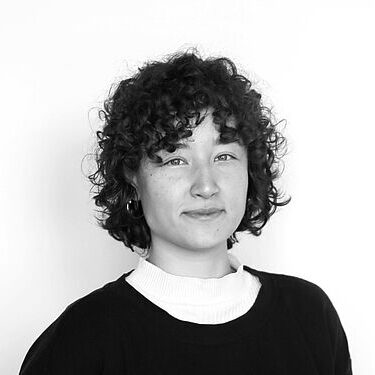
B.Sc. Gabriela Kienbaum

Prof. Dr.-Ing. Harald Kloft
leads the scientific staff in the orientation and execution of the design process creation and supports them in an advisory capacity in the creation of test geometries and demonstrators. He is responsible for the content and organisational coordination of all work on the part of ITE. He instructs the research engineer at ITE in the conceptual structure, execution and evaluation of the theoretical and experimental research work. He is the spokesperson of the TRR 277.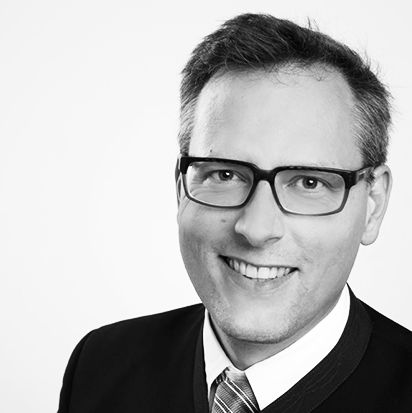
Prof. Dr.-Ing. habil. Stefan Kollmannsberger
is Professor at Bauhaus-University Weimar and is Head of the Chair of Data Science in Civil Engineering. He was head of the work group ‘Simulation in Applied Mechanics’ at the Chair of Computational Modeling and Simulation and has a fifteen year-long scientific record in that field. In this project, he is responsible for the development of simulation methods for metal based artefacts.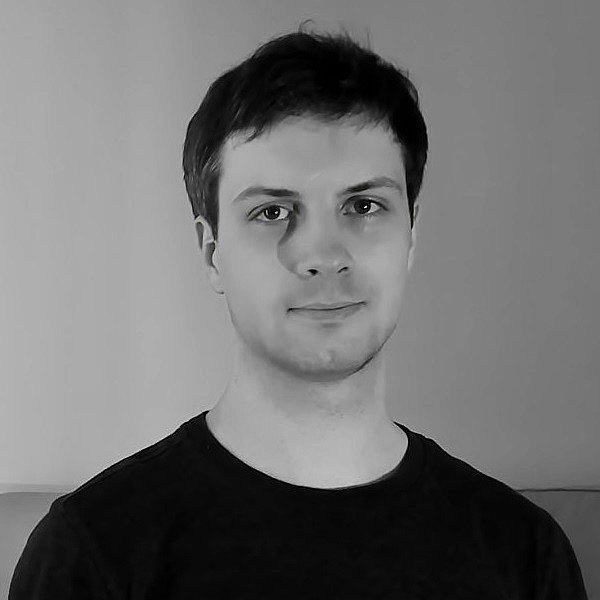
Dr.-Ing. Philipp Kopp
is developing efficient finite element methods for engineering applications at the Chair of Data Science in Civil Engineering of the Bauhaus-Universität Weimar. One of his research areas is the spatiotemporally adaptive resolution and numerical optimization of additive manufacturing processes. He also focusses on immersed simulations of 3D-printed geometries and on spectral element or spectral cell methods for inverse problems in non-destructive testing.
Prof. Dr.-Ing. Manfred Krafczyk
is responsible for WPs 3-5 and contributes to HPC and setup related aspects of the corresponding simulations. He advises Dr. Kutscher in conducting the simulations and the analysis of the results. He also takes responsibility for the data exchange with other projects within the TRR.