

Has Publication?: Yes

Prof. Dr. Ena Lloret-Fritschi AMC-MERCATOR-FELLOW
AMC-Mercator-Fellow Prof. Dr. Ena Lloret-Fritschi is an architect with years of experience in digital processes with concrete. She is Assistant Professor of Fabrication and Materials Aware Architecture at the Accademia di Architettura Mendrisio, USI-ARC, Switzerland. Her research focuses on using novel processing techniques for mineral building materials like concrete. More specifically, her work focuses on using fast-setting concrete processed through Digital Casting Systems. This method enables the use of ultra-thin formwork made of paper, clay, or recycled polymers. Through research and design studies her research work investigates how these novel processing techniques impact how we can design and build more sustainable architecture in the near future. Before joining the USI-ARC, Dr. Lloret-Fritschi held a Postdoctoral position in Digital Fabrication, at the NCCR, ETH. Here she was in a bridge position between two research groups, Gramazio Kohler Research (GKR) and Physical Chemistry of Building Materials (PCBM), focusing on shaping concrete with minimal materials using digital fabrication processes. Prof. Dr. Lloret-Fritschi also has several years of professional experience as an architect in practice, working for firms that include OMA in Holland, Allmann Sattler Wappner in Germany, and Dietrict Untertrifaller and Querkraft in Austria. She was the project leader for several architectural competitions and assisted in several projects. In 2022, Ena Lloret-Fritschi was appointed Mercator Fellow by the TRR 277 AMC in honor of her contributions to the AMC. Within the context of her AMC cooperation, she contributed by sharing her experience in digital processing systems for concrete, as well as by cooperating for the development of printable earth mixtures in joint workshops involving both AMC senior researchers and AMC PhD students from TUBS and TUM. The ongoing collaboration focuses on advancing the extrusion 3D printing with natural and earth-based materials for reusable earth formworks, including building up processing twins, developing clear methodologies for experimental studies, and advancing dedicated material mixtures. As outcome of her Mercator Fellowship collaborative work, a final demonstrator will be printed together with AMC staff. The research will lead to a documentation of the process methodology and a validation with a final demonstrator, which will be published in a high-level journal anticipated in 2023. In addition to a rich exchange between the working groups of Prof. Dr. Hack and Prof. Dr. Dörfler, a new collaboration emerged with Dr. Ing. Inka Mai from the working group of Prof. Dr. Lowke. For the future, Prof. Dr. Ena Lloret-Fritschi aims to expand the collaboration that started with the AMC Mercator Fellowship and to develop a joint research grant application from it.
Prof. Dr. Laura De Lorenzis AMC-MERCATOR-FELLOW
AMC-Mercator-Fellow Prof. Dr. Laura De Lorenzis was Professor and Director of the Institute of Applied Mechanics at TU Braunschweig from 2013 to early 2020 and was part of the initial team of the AMC. In February 2020 she became Professor of Computational Mechanics at ETH Zurich. Since then, she nevertheless participated in the meetings of the AMC and thus continued to make a scientific contribution to the AMC. In honor of her recent and future contribution to the AMC Laura De Lorenzis was appointed as AMC-Mercator-Fellow by the TRR 277 AMC in late 2022. In her AMC-Mercator-Fellowship she started to and will further integrate in the AMC the computational technology that her PhD student Helge Hille recently developed under her supervision (in collaboration with Sid Kumar, former Postdoc in the group and now Assistant professor at the TU Delft), which is denoted as Floating Isogeometric Analysis (FLIGA). This technology is currently the only option available to simulate in a Lagrangian setting mechanical problems involving material behavior with history variables and featuring extreme deformations along one characteristic direction, such as the extrusion problem. FLIGA will be specifically integrated with the future project A09 of PL Mai and PL Hack on Injection 3D Concrete Printing, in order to simulate this novel process. Once the simulation is calibrated and validated to be quantitatively predictive, it can be used to explore the vast design space of the process, explain observed instabilities, and ultimately optimize the process with virtual experiments, much faster and less expensive than actual ones. The first comparisons with preliminary experimental results at the TU Braunschweig have been carried out and a joint journal publication together with different AMC Project Leaders as well as joint presentations at international conferences (e.g. the upcoming Sim-Am conference in Munich, July 2023) are planned for the near future. The experimental results stemming from the AMC will be an important benchmark for FLIGA, as they will allow Prof. Dr. Laura De Lorenzis and her team at ETH Zürich to test FLIGA on a complicated challenge with quantitative results.
Prof. Dr.-Ing. Dirk Lowke
Prof. Dr.-Ing. Dirk Lowke is Chair of Materials and Methods in Digital Construction. He will advise the scientific staff in carrying out their work in line with the formulated project aims. He is responsible for the coordination and quality control of all work conducted by the Chair of Materials and Methods in Digital Construction at the Department of Materials Engineering at TU Munich.
Dr.-Ing. Mehdi Maboudi
is an associate researcher at the IGP and will help with supervision of one of the doctoral researchers. His expertise in computer vision, scanning technologies and implementing deep learning methods will be used in this project.
Prof. Dr.-Ing. Inka Mai
is the head of the Institute of Building Physics at Leibniz Universität Hannover LUH.
Dr.-Ing. Jeldrik Mainka
General Manager / administrative coordinator. He is organizing the day-to-day management of the SFB TRR 277 AMC, supports the Speaker and Co- speaker such as the AMC Board in the coordination of the TRR 277. He is reporting to the AMC Board and is head of the AMC Business Office (AMC-Geschäftsstelle).
M. Sc. Carla Matthäus
She was an expert in additive manufacturing, rheological questions and material development. She organized the material development and material testing on behave of WG Gehlen. She also was an expert in AM by extrusion of concrete, rheological questions and material development. She was responsible for all research regarding extrusion, material development and testing.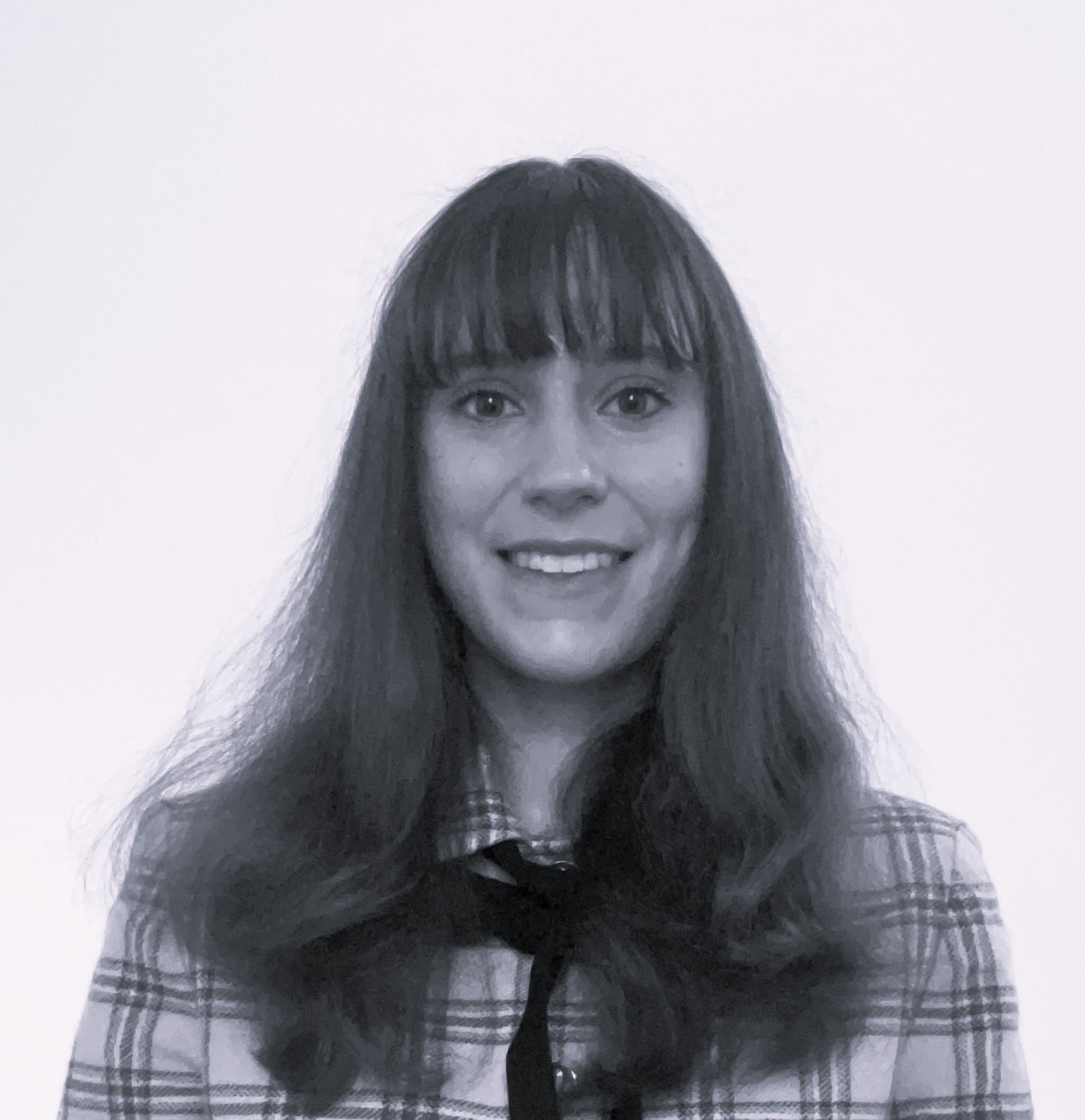
M. Sc. Anais Martinson
Anaïs Martinsohn graduated from ESME (École Spéciale de Mécanique et d’Électricité) with a specialization in design. During her final year of study, she joined TRR 277 at TU Braunschweig as a guest researcher. Working at the Institute of Structural Design (ITE) and the Leichtweiß-Institute for Hydraulic Engineering and Water Resources (LWI), she contributed to the FLOWall project within the AMC research area A04, helping to establish the foundation for the project's further development. Her work focused on small-scale wave flume experiments investigating the influence of FLOWall’s characteristic horizontal undulation on wave overtopping in comparison with more conventional coastal protection structures, such as vertical and recurved walls. One of the main objectives of her research is the development of design parameters for 3D-printed double-recurved FLOWall structures, with the aim of enabling future coastal protection systems that combine hydraulic efficiency with architectural quality.