Has Publication?: Yes
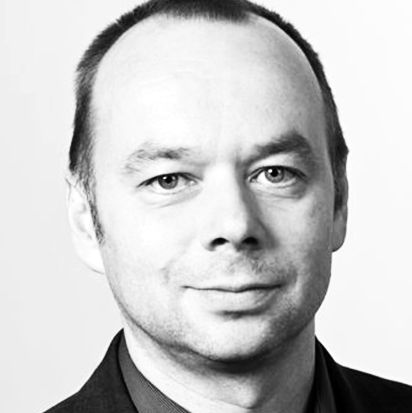
Prof. Dr.-Ing. Frank Petzold
acts as co-lead in this research project. He is responsible for leading and guiding WP1 and parts of WP 4. He is also responsible for coordinating the collaboration with other projects. He leads the doctoral researcher in the design and implementation of the research data management & publication platform. He is responsible for the coordination of the research projects in the TRR 277 and the coordination with the University Library of the Technical University of Munich.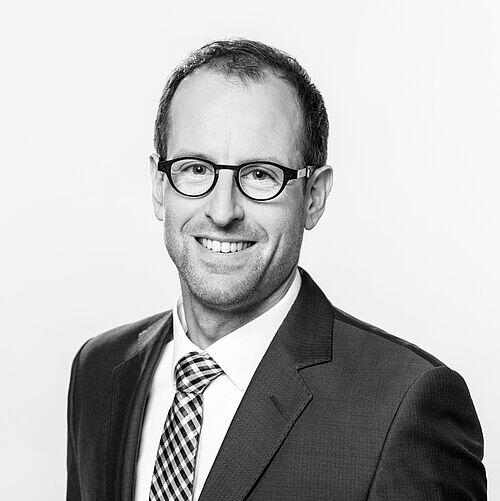
Prof. Dr. phil. Daniel Pittich
leads the research fellows according to the WP in th eprocesses of exploration ,identification and evaluation of AM in the context of technology, parameters and operational processes. On this basis, he supports the analysis and transformation of the data for specific Qualification Concepts as well as the development of the framework of aspects of qualification concepts in AM. In co-operation with PL Winter, he is responsible for the co-ordinating adaptation to the cooperating projects of TRR 277 (WP 1).
Ass. Prof. Dr. Mariana Popescu AMC-MERCATOR-FELLOW
AMC-Mercator-Fellow Asst. Prof. Dr. Mariana Popescu is from the TU Delft and within architectural design, her area of expertise is computational and parametric design with a focus on digital fabrication and sustainable design. Her extensive involvement research projects related to promoting sustainability has led to a multilateral development of skills, which combine the fields of architecture, engineering, computational design, and digital fabrication. More specifically, her research is centred around digitally fabricated stay-in-place formwork systems for complex concrete geometries using 3D-knitting techniques. Her interest in additive manufacturing technologies, structural efficiency, and fabrication with material effectiveness is closely related the research of TRR 277 Additive Manufacturing in Construction (AMC). In 2022, Mariana Popescu was appointed as AMC-Mercator-Fellow by the TRR 277 AMC in honor of her contribution to the AMC One of her contributions within the AMC was the joint development of a cross-university student summer school/ seminar between TU Munich, TU Braunschweig, and TU Delft in 2022 and 2023. The seminar aims to bridge fundamental principles of geometric computation and design and use these insights to develop new algorithms and tools for 3D shape generation, simulation, structural design, and manufacturing in design and engineering. Students joining from all three institutions are taught innovative computational design solutions for advanced manufacturing and construction at various scales through the development of a textile reinforced bridge demonstrator. The prototype combines digital from finding techniques, 3D knitted flexible formworks, and shotcrete 3D printing, thus bringing together researchers from several projects within the AMC (C06, A04, B04, C02, C03, C04). The cooperation with the AMC has made it possible to scale-up and automate a previously developed technique. This is an important contribution as it takes one step closer to being able to apply these methods in a real-world environment in terms of construction. Moreover, in bringing together researchers and teaching students from different universities and different faculties the completion of the prototype also proves the importance of cross-disciplinary collaboration and, importantly, the education of a new type of professional in the field of construction. Beyond this collaboration phase, new synergies have been created with researchers from the AMC and a sustained collaboration beyond the term of the fellowship is expected to emerge. In the short term this can be started through joint guidance of master thesis students. Finally, Within the remaining time of the collaboration in 2023, the aim is to distil the opportunities and challenges identified within the development of the prototype and develop a joint research grant proposal that would enable a sustained collaboration.
Prof. Dr.-Ing. Annika Raatz
she is responsible for the scientific management and coordination of project B04. In addition to supervising the content of the research assistant, she supports the coordination of the work and represents the project internally and externally as head of the institute.
Dr.-Ing. Christina Radlbeck
leads scientific teams for AM, fatigue and fracture and aluminium at MB and is responsible for the MB Laboratory. She supervises experiments and provides assistance in analysis and interpre- tation of results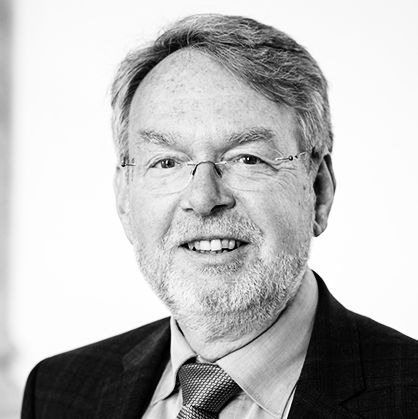
Prof. Dr. rer. nat. Ernst Rank
was head of the Chair for Computation in Engineering of TUM. Since his retirement in March 2020 he has been member of the Emeriti of Excellence of the university. As such, he guides researchers in the areas of geometric modelling and develops simulation methods of high accuracy. He has actively carried out research in this area himself for decades. In this research project, he is responsible for the bridging of scales as well as the development of simulations regarding mineral based artefacts. He intends to continue his research in TR277 at least for the whole first funding period.
M.Sc. Tobias Recker
leads scientific teams for AM, fatigue and fracture and aluminium at MB and is responsible for the MB Laboratory. She supervises experiments and provides assistance in analysis and interpre- tation of results
M. Sc. Christiane Richter
Christiane Richter is a research associate and doctoral candidate at the Professorship of Structural Design at the TUM School of Engineering and Design under the guidance of Prof. Dr. Pierluigi D’Acunto. With a solid foundation in structural engineering and expertise in concrete Additive Manufacturing, her primary focus lies in formulating a Holistic Design Framework (HDF). This framework integrates architectural, structural, and fabrication considerations to derive optimal design solutions for additively manufactured structures.