

Location: TU Braunschweig

M. A. S. Noor Khader
is a scientific assistant at the ITE, TU Braunschweig. She received her master's degree in architecture and digital fabrication at the ITA, ETH Zurich in 2019. She is interested in rethinking architecture through the interplay between design and other disciplines. Her academic and career intentions include exploring innovative design and fabrication methods in order to expand the possibilities of what the built environment is about and what it could be. She has been involved in various research projects at the ITE including Fiber Reinforced 3D Concrete Printing, Injection 3D Concrete Printing and currently she is exploring Clay 3D Printing.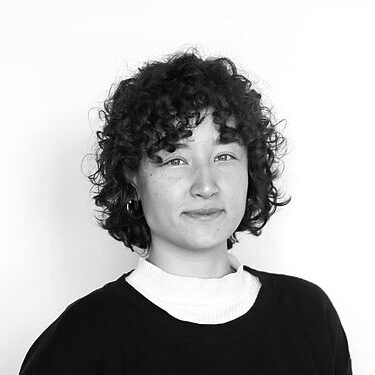
B.Sc. Gabriela Kienbaum

Prof. Dr.-Ing. Harald Kloft
leads the scientific staff in the orientation and execution of the design process creation and supports them in an advisory capacity in the creation of test geometries and demonstrators. He is responsible for the content and organisational coordination of all work on the part of ITE. He instructs the research engineer at ITE in the conceptual structure, execution and evaluation of the theoretical and experimental research work. He is the spokesperson of the TRR 277.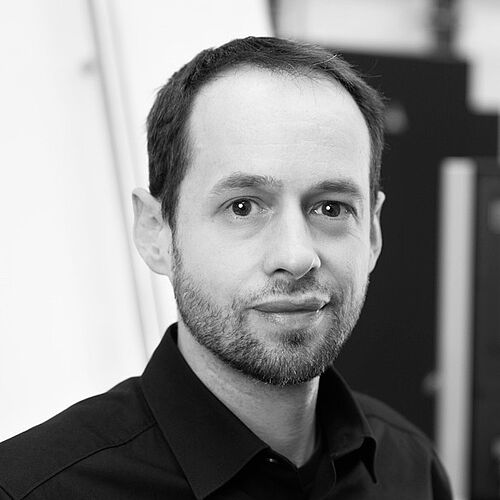
Dipl.-Ing. Markus Köhler
he was an AMC Researcher in Focus Area A in the Project A 07.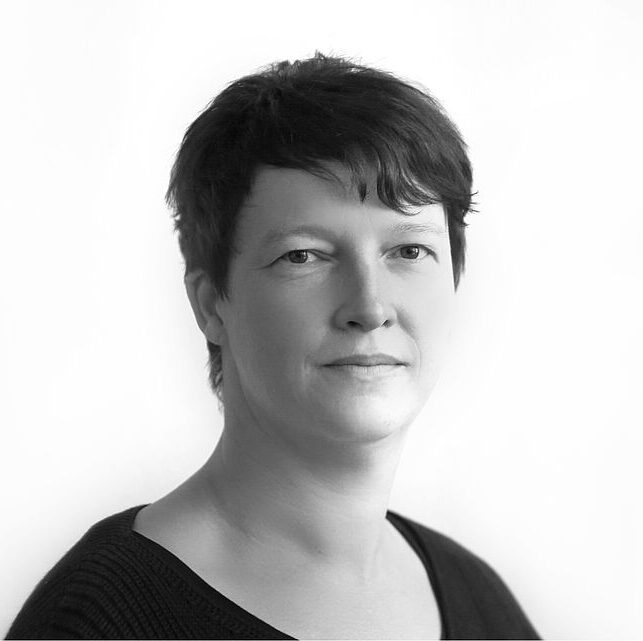
Anika Kolbe
was responsable for accounting of TRR 277
Prof. Dr.-Ing. Manfred Krafczyk
is responsible for WPs 3-5 and contributes to HPC and setup related aspects of the corresponding simulations. He advises Dr. Kutscher in conducting the simulations and the analysis of the results. He also takes responsibility for the data exchange with other projects within the TRR.
Dr.-Ing. Konstantin Kutscher
is the lead developer of the VirtualFluids software. In this function he is indispensable for the project as a new doc. res. could not possibly extend the existing framework (>700,000 lines of code) with the new models to be developed and adapted in WP 1-4. He is also experienced in conducting massively parallel runs on THIER-0 systems and analyzing huge data sets with more than 10 degrees of freedom.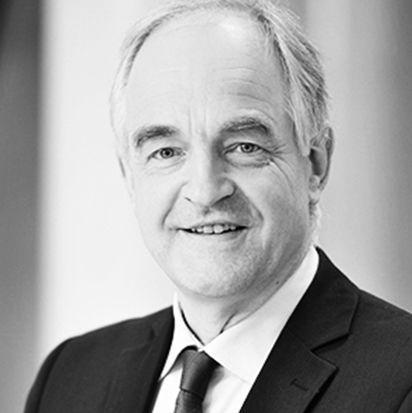
Prof. Dr.-Ing. Arno Kwade
Head of the institute for particle technology. Head of iPAT and supports the academic staff regarding the conditioning of particle products.