
Research Summary Report of A02
Particle-Bed 3D Printing by Selective Cement Paste Intrusion (SPI) – Particle Surface Functionalisation, Particle Synthesis and Integration of WAAM Reinforcement
[22.10.2025]
Straßer, Alexander; Researcher, alexander.strasser@tum.de
Kränkel, Thomas; Researcher thomas.kraenkel@tum.de
Gehlen, Christoph; Project leader, gehlen@tum.de
TUM, Chair of Materials Science and Testing
Main Goal
The goal of A02 is to implement reinforcement by Wire and Arc Additive Manufacturing (WAAM) in concrete elements produced by Selective Paste Intrusion (SPI), see Figure 1. The SPI and combined SPI + WAAM process will also be further investigated with a focus on ecological improvements. Both individual processes will first be examined separately. To achieve these goals, the SPI process will include optimization of the cement paste with supplementary cementitious materials, adjustments to the particle bed, the use of recycled aggregates and waste products as aggregate, and increasing the particle bed’s packing density to reduce the cement paste amount. For the WAAM process, an additional step will involve integrating stud welding to make the process faster and with lower heat input on SPI. This approach is expected to significantly reduce energy-intensive welding operations, contributing to a more sustainable and efficient process.
Summary
A new research phase has been initiated that explores the integration of fine fractioned recycled aggregates (FFRA) in SPI cement pastes. Further optimization of the cement paste is ongoing, focusing on the ecological improvement of SPI mixtures using supplementary cementitious materials. Joint experiments with A02-3 (Kwade) are planned to investigate the influence of recycled aggregates on the rheological behavior, printability, and mechanical performance in the particle bed.
The replacement of cement by fine fractioned recycled aggregates (FFRA) was investigated to evaluate their impact on rheology and printability. Rheological adjustment for SPI requirements proved feasible with up to 20 wt.% FFRA. At 10 % and 20 % FFRA, the fresh-state behavior remained comparable to the reference mixture, whereas at 30 % FFRA, the paste showed a decrease in penetration behavior. All cement pastes could be printed successfully without nozzle clogging, even at higher FFRA contents. The observed change in penetration response at 30 % FFRA indicates the limit for maintaining sufficient paste flowability and intrusion quality, see Figure 2.
These findings demonstrate that partial cement replacement by recycled fine fractions up to 20 wt.% is feasible without compromising printability, representing a promising step toward the ecological optimization of SPI cement pastes.
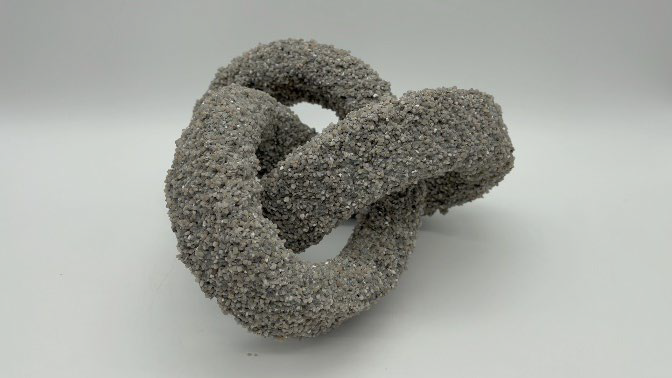
Figure 1: Concrete-Infinity-Knot by SPI / credit: Alexander Straßer
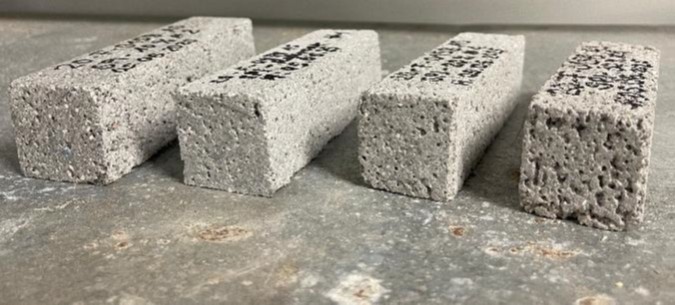
Figure 2: Specimen printed with fine fractioned recycled aggregates as SCM. From left to right: 10 % FFRA, Reference (without FFRA), 20 % FFRA, and 30 % FFRA / credit: Alexander Straßer