Archives: AMC Personen
Dr.-Ing. Philipp Kopp
is developing efficient finite element methods for engineering applications at the Chair of Data Science in Civil Engineering of the Bauhaus-Universität Weimar. One of his research areas is the spatiotemporally adaptive resolution and numerical optimization of additive manufacturing processes. He also focusses on immersed simulations of 3D-printed geometries and on spectral element or spectral cell methods for inverse problems in non-destructive testing.
Prof. Dr.-Ing. Manfred Krafczyk
is responsible for WPs 3-5 and contributes to HPC and setup related aspects of the corresponding simulations. He advises Dr. Kutscher in conducting the simulations and the analysis of the results. He also takes responsibility for the data exchange with other projects within the TRR.
M. Sc. Ema Krakovska
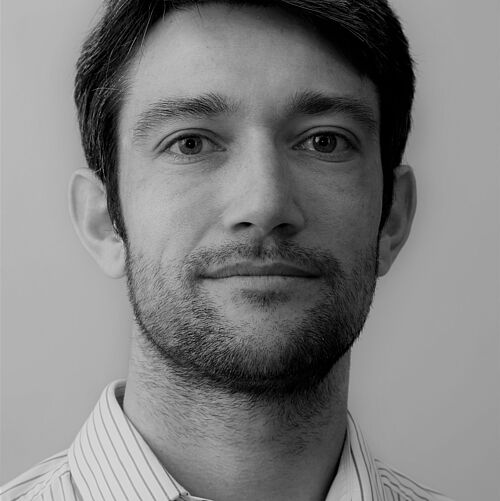
Dr.-Ing. Thomas Kränkel
Head of workgroup concrete technology and assists Prof. Gehlen in leading project A02. He instructs and supports the academic staff regarding additive manufacturing and concrete technological questions.
Dr.-Ing. Konstantin Kutscher
is the lead developer of the VirtualFluids software. In this function he is indispensable for the project as a new doc. res. could not possibly extend the existing framework (>700,000 lines of code) with the new models to be developed and adapted in WP 1-4. He is also experienced in conducting massively parallel runs on THIER-0 systems and analyzing huge data sets with more than 10 degrees of freedom.
Prof. Dr.-Ing. Frank Krafft
Prof. Krafft has provided significant support to the TRR277 project A06 at the metallography and thus contributes to the successful progress of the project A06.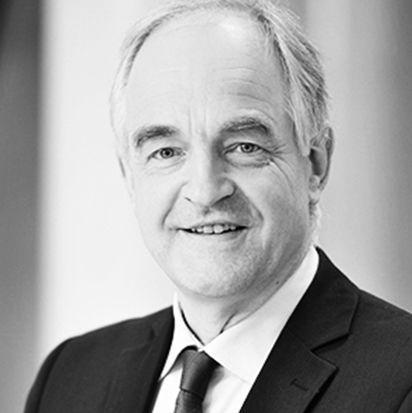
Prof. Dr.-Ing. Arno Kwade
Head of the institute for particle technology. Head of iPAT and supports the academic staff regarding the conditioning of particle products.
M. Sc. Quoc Tuan La
is a doctoral researcher at TU Braunschweig. He is responsible for developing material model of concrete used in additive manufacturing. His doctoral research also focuses on simulating the additive manufacturing deposition process on a part scale. Moreover, he will frequently publish the achieved results within the community.