Tag: associates scientists
Prof. Dr. Torben Gädt
Torben Gädt is professor at the Chemistry Department at TU Munich. He holds the chair for the Chemistry of Construction Materials. The research of his group is focused on admixture driven concrete design with a special focus on the rheology and hydration kinetics of inorganic binder phases. He will support the work of the TRR 277 as an expert in rheology-control of mineral construction materials with admixtures.
Prof. Dr. sc. ETH Elyas Ghafoori
Elyas Ghafoori is a professor of “Steel, Composite and Lightweight Construction” and director of Institute for Steel Construction and Test Centre Supporting Structures at Leibniz University Hannover. He and his group are active in the area of metal additive manufacturing, in particular on wire and arc additive manufacturing (WAAM). Current research topics include: structural integrity & fatigue of WAAM, WAAM for repair/strengthening, hybrid manufacturing, WAAM simulation and WAAM for bionic designs.
Dr.-Ing. Klaudius Henke
has been working on additive manufacturing in construction for many years. This work also includes additive manufacturing with wood. He leads the project A08 and provides general guidance and support for the academic staff at HBB. In addition, he is responsible for the coordination of the proposed project within the TRR 277. He was a member of the AMC Board for the first funding period 2020-2023.
Prof. Dr.-Ing. Frank Krafft
Prof. Krafft has provided significant support to the TRR277 project A06 at the metallography and thus contributes to the successful progress of the project A06.
Eduardo Gascón Alvarez
Eduardo Gascón Alvarez is an architect (UPC, 2018) and PhD in Building Technology (MIT, 2025) working at the intersection of architecture, sustainability, and computation. He is co-founder and CTO of Forma Systems, a company developing shape-optimization solutions for the concrete construction industry. During his time at MIT, Eduardo taught two graduate-level courses, published in major scientific journals and conferences, and developed novel methods to integrate and quantify passive and low-energy cooling strategies within building components. As a guest researcher within the AMC, he collaborates with C03 on thermal optimisation of AM wall structures.
Dr.-Ing. Vittoria Laghi
Dr. Vittoria Laghi is a post-doc researcher in Structural Design at University of Bologna, Italy. Her expertise lies in metal additive manufacturing (AM) solutions for structural applications, with specific focus on Wire-and-Arc Additive Manufacturing (WAAM). Dr. Laghi has contributed as guest researcher since 2021 in TP A07 for the design of new optimized solutions for construction. In particular, she visited TU Braunschweig as guest researcher for several month at the end of 2021, during which she worked on innovative diagrid solutions for pillars realized with WAAM dot-by-dot printing strategy. Both design and fabrication activities were carried out at ITE and DBFL. Additional studies were carried out on possible combination of WAAM dot-by-dot with shotcrete 3D printing (SC3DP) through a collaboration between AMC projects A07 and A04. From this, the FloWall concept was developed and presented in various competitions, winning important awards such as the Special Mention by Autodesk at 3D Pioneers Challenge 2022 and the Iconic award for its disruptive concept. The research outcomes of this collaborations were also presented in a publication accepted in MDPI Buildings journal. Dr. Laghi’s activities as guest researcher continued also in 2022, during which she supervised the research activities of A07 for the structural design part. She is supposed to become Project Leader in funding phase 2 within A07. Dr. Laghis’ cooperation within the AMC also contributes in exchanging activities between the German and Italian universities, by bringing Italian Master’s students at TU Braunschweig to pursue part of their Master’s Thesis abroad within the AMC program. So far, two Master’s students from University of Bologna (Lidiana Arrè and Edoardo Benvenuti) have participated in the exchange program to pursue their Master’s Thesis at TU Braunschweig under the co-supervision of Dr. Laghi and Prof. Dr. Kloft.
Prof. Dr. Carlos Lázaros AMC-MERCATOR-FELLOW
AMC-Mercator-Fellow Prof. Dr.-Ing. Carlos Lázaro is the academic director of the master's degree in civil engineering at the Universitat Politècnica de València (UPV, Spain). He has worked as a structural engineer in Barcelona (1991–1992), Berlin (1992–1994) and Valencia (1994–2000), and was a founding partner of CMD Ingenieros (2006-2014), an engineering firm specialising in structural design. He has been the president of the International Association for Shell and Spatial Structures (IASS) since 2021, a leading scientific and technical association in the field of lightweight structures, founded by Eduardo Torroja in 1959. He received the Pioneers' Award from the Spatial Structures Research Centre at the University of Surrey in 2021 for his contributions and career in the field of structures. Carlos Lázaro's research builds upon his professional experience and explores the design, realisation and performance of structural systems. It comprises • the design of structures with non-conventional materials (Félix Candela's last shell structure in 2000, pioneering the application of fibre-reinforced concrete in architectural shells, and the Turia Bridge in Manises in 2009, first application of structural recycled aggregate concrete in a cable-stayed bridge); • Innovative lightweight structural systems (experimental bending-active footbridges made of GFRP tubes and of HPFRC prestressed slabs, and a patented 2-axes solar tracking system for energy generation using PV panels); • Conceptual design of non-conventional bridge structures (viaducts for the Hyperloop transportation system). His current research lines focus on structural resiliency, including the mitigation of wind-induced vibrations in long-span bridges (in collaboration with the Chair of Structural Analysis at the TU Munich) and the prevention of collapse in ageing steel bridges (one article published in the leading scientific journal Nature). Carlos Lázaro collaborates in project C02 of area C' Design and Construction'. The focus is on researching innovative structural systems suitable for production using additive manufacturing, including adapting the '3D structural puzzle' to various structural systems, integrating components made of different materials, and addressing key questions in design and optimisation for manufacturability. Carlos Lázaro's experience in designing structural systems that incorporate innovative technologies provides an enriching, holistic perspective for the research efforts of the TRR 277 AMC. His collaboration also contributes to identifying points of contact between projects in Area C – and, to some extent, also in Area B. Furthermore, Carlos Lázaro's leadership role in the International Association for Shell and Spatial Structures (IASS) provides opportunities to expand the network and promote exchange with other international experts worldwide.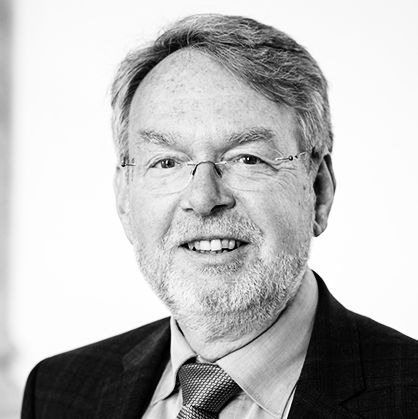
Prof. Dr. rer. nat. Ernst Rank
was head of the Chair for Computation in Engineering of TUM. Since his retirement in March 2020 he has been member of the Emeriti of Excellence of the university. As such, he guides researchers in the areas of geometric modelling and develops simulation methods of high accuracy. He has actively carried out research in this area himself for decades. In this research project, he is responsible for the bridging of scales as well as the development of simulations regarding mineral based artefacts. He intends to continue his research in TR277 at least for the whole first funding period.